
Know what the trim is for
"Trim the tree" can mean very different jobs, and the price and the result follow from which one you want. Settle it before anyone climbs.
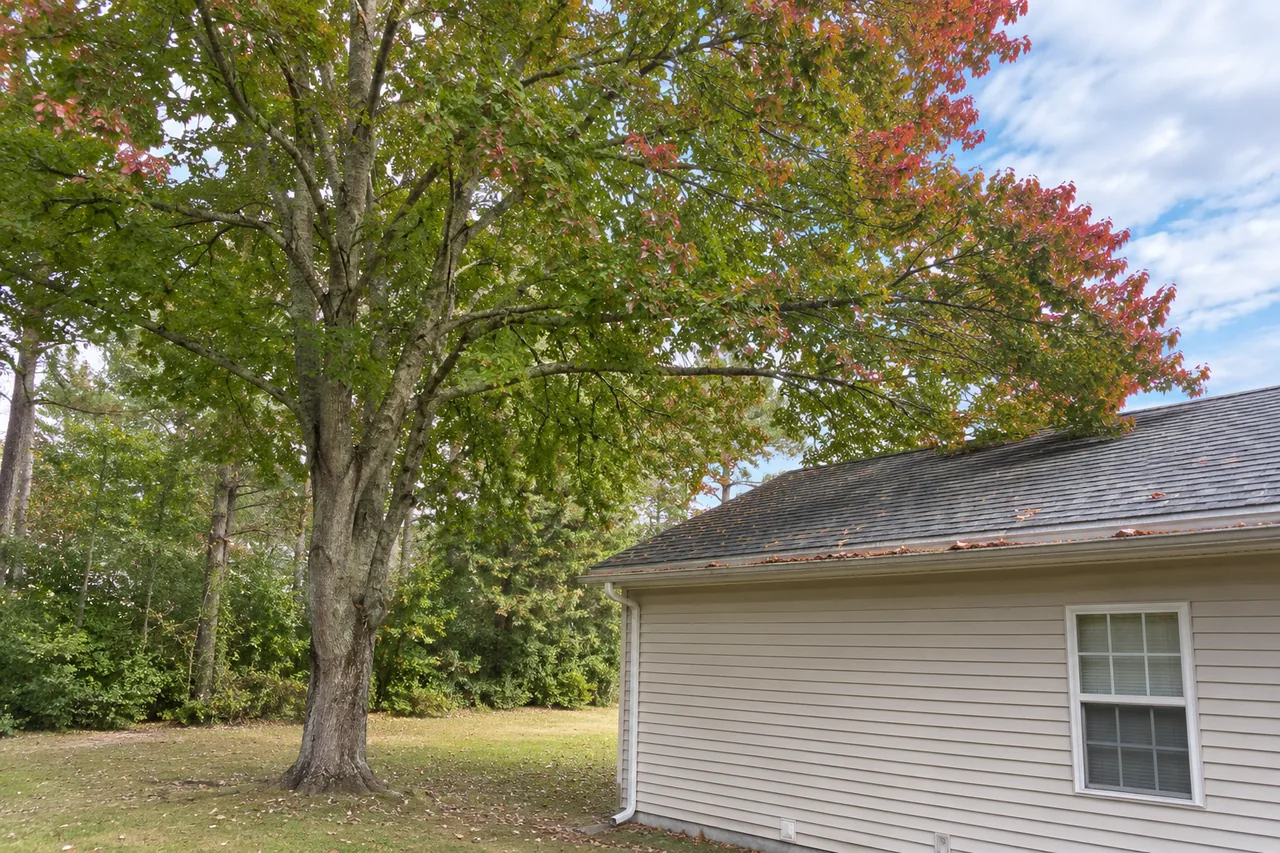
- Clearance. Limbs off the roof, away from the chimney and gutters, up over the driveway, or back from the house siding.
- Deadwood. Dead branches out of the crown, so they don't land on the car or the deck in the next blow.
- Storm preparation. Weak or overlong limbs shortened or removed, and a tree's structure corrected while it's young enough to respond.
- Light and view. A crown opened to let sun reach the lawn, or a view toward the water kept clear.
- Hedge and screen work. Height and width brought back on a row of Leyland cypress, holly or arborvitae.
Tell the contractor which of these you're after, and ask them to say which limbs come off, roughly how much of the crown, and why.
Pruning for wind
Researchers writing for University of Florida Extension sorted common southeastern Coastal Plain trees by how well they resist wind, drawing on what survived past hurricanes. Their companion publication on lessons from hurricanes gives this advice for homeowners: start a structural pruning program early and keep it up on established trees, have trees checked, and consider removing trees from their "lowest wind resistance" list, especially ones that are over-mature and threaten life or property.
Several familiar Sussex County yard trees land in the middle or bottom of that list. Loblolly pine, red maple, willow oak and black cherry rank medium-low; Bradford pear and Leyland cypress rank lowest. Sweetgum ranks medium-high, and American holly sits in the highest group. NC State Extension adds that red maple branches can break under wind and ice, and that Bradford pear forms weak crotches that break with age, wind and ice, which pruning can help correct. More on each tree is on the Sussex County trees page.
Topping, hat-racking and the towns that ban them
Cutting a tree's top off flat to make it shorter feels like a fix for a tall pine or maple near the house. Two beach towns write against it directly.
- Dewey Beach prohibits topping. Its code allows pruning for appearance or health, and reduction under utility lines for safety, but every pruning or reduction job needs a permit, which the town doesn't charge for (checked Nov 9, 2026).
- Rehoboth Beach defines topping in its tree chapter as trimming that stops a tree's natural upward growth and significantly alters its shape, and defines hat-racking as flat-cutting the top so the leaders are severed, or stubbing off mature wood more than three inches thick (checked Nov 9, 2026). The city's trees page says it doesn't get involved in pruning on private property, but its permission is needed to prune trees in city rights-of-way.
Outside those towns, none of the local rules read for this site stops a homeowner from topping a tree (checked Nov 9, 2026). If the goal is a shorter tree near the house, ask whether a reduction back to side limbs will do it, or whether the tree should come out instead.
When to trim
Deadwood and limbs over the roof can come off any time of year, and doing it before the winter storm months makes sense on a coastal lot. A few timing points are specific:
- Leyland cypress. University of Maryland Extension notes that the canker fungi that kill Leyland branches spread in rainy spring weather, carried by rainwater to other branches, so a dry spell is the sensible time to cut into a diseased screen. Its advice is to prune infected branches several inches below any visible canker, and UD's 2009 post adds that shears should be wiped with rubbing alcohol now and then while working.
- Bagworms. University of Delaware extension writing points out that the height of a mature Leyland row makes bagworm treatment difficult or impossible for most homeowners. Keeping the row at a reachable height is part of the answer.
- Leaves on the ground. Delaware never allows leaves to be burned, and limbs can be burned only from October 1 through April 30 (DNREC, checked Nov 9, 2026). Fall and winter trims leave more options for the brush.
The 10-foot line around wires
Delmarva Power's customer handbook says to keep yourself, ladders and tools at least 10 feet from power lines, and to call the company at 800-898-8042 before doing any work within 10 feet of one. Delaware Electric Cooperative, which serves most rural areas of Kent and Sussex, asks members to plant trees at least 25 feet from overhead lines and taller-growing trees at least 40 feet away; its outage line is 855-332-9090. In Lewes the electric utility is the Board of Public Works, (302) 645-6228 (all checked Nov 9, 2026).
Trees growing into the lines along the road are the utility's job; Delaware Electric Cooperative, for one, sends contract crews to trim along its lines. Call rather than cutting. Limbs near the wire that runs from the pole to your house are worth raising with your utility before the trim, since it may need to be disconnected while the crew works. Say so in your request.
Trees and hedges at the road
State law gives DelDOT the authority to trim or remove vegetation within its rights-of-way and sets a clear zone of 10 feet from the pavement edge on most roads, 7 feet on interior subdivision streets or to the far edge of an adjacent sidewalk, whichever is shorter. An older statute, Title 17, section 513, says hedges along public roads must be trimmed at least once a year and kept no taller than 4½ feet, and that the trimmer must clear clippings off the road within two weeks (checked Nov 9, 2026). If a screen or tree sits at the road edge, call DelDOT's South District in Georgetown, (302) 853-1340, before work starts; its "Safety" permit type covers tree trimming.
How the crew reaches the limbs
Where a truck can park close, a bucket lift may reach much of the crown. In a fenced backyard or on a soggy winter lawn, a climber with ropes is the likelier plan, and limbs over the roof are tied off and lowered rather than dropped. Ask whether the truck will drive on the lawn and how the crew will protect a septic field, the irrigation heads and the fence.
Also ask what will happen to the cuttings. Chipped on site, hauled away, or left in a pile for you are three different prices.
Published trimming prices
Thumbtack's national 2026 tree trimming guide, last updated October 23, 2026, puts most trimming jobs between $402 and $1,158, with averages of $186 at the low end and $2,456 at the high end (checked Nov 9, 2026). It prices by height:
| How tall the tree is | National range |
|---|---|
| Small, 5 to 10 ft | $474–$848 |
| Medium, 11 to 20 ft | $577–$993 |
| Tall, 21 to 40 ft | $768–$1,362 |
| Very tall, past 40 ft | $1,126–$1,957 |
The same guide lists trimmers' hourly rates of $60 to $80, emergency work up to $250 an hour, and $50 to $100 for chipping (checked Nov 9, 2026). These are national averages, not Sussex County prices. More on what tree work costs.
Trimming mistakes to avoid
- Topping in a town that bans it. In Dewey Beach it's a code violation, and Rehoboth's tree chapter names it outright.
- Pruning a town or road tree without asking. Rehoboth wants permission for trees in its rights-of-way, and DelDOT has a permit for trimming along state roads (checked Nov 9, 2026).
- Ladders near wires. Delmarva Power's 10-foot rule applies to homeowners as much as anyone.
- Letting a Leyland row run away. At 60 to 70 feet, the height NC State lists for mature Leylands, nobody can reach the bagworms or the cankers.
- Nothing written down. Which limbs, how much, and what happens to the brush should be on paper.
When a trim won't fix it
If the trunk is cracked, the base is rotting, the tree has started to lean, or a pine has turned color from top to bottom, pruning won't help. See dead or leaning trees. A tree from the lowest wind-resistance group that's already oversized for its spot may be a candidate for removal rather than another trim, and a Leyland screen past saving has its own guide, Leyland cypress removal.
Trimming questions
Do I need a permit to trim a tree in Sussex County?
Not in most of the county. Dewey Beach requires a permit for any pruning, though it doesn't charge for it; Rehoboth wants permission for right-of-way trees, and DelDOT handles work along state roads (checked Nov 9, 2026).
Can limbs over my roof come off without hurting the tree?
Usually. Clearance pruning that removes limbs back to a trunk or a larger branch is routine. Ask the contractor to show you which limbs they'll take before they start.
My neighbor's limbs hang over my yard. What can I do?
Start with the neighbor. Rehoboth's trees page makes the same point: the owner may not realize the tree is affecting your property. For a legal dispute, talk with a lawyer; this site doesn't give legal advice.
Is it worth trimming a Bradford pear?
NC State Extension says pruning can improve its structure, but the tree splits with age and ranks lowest for wind resistance in the University of Florida list, and UF's hurricane lessons publication suggests considering removal for over-mature trees from that group that threaten life or property.
Requests from this site go to one independent contractor who works in Sussex County. The site prunes nothing itself.
- Duryea and others, Selecting Coastal Plain Species for Wind Resistance, UF/IFAS Extension FR174; Duryea and Kampf, Wind and Trees: Lessons Learned from Hurricanes, UF/IFAS Extension FR173.
- NC State Extension Plant Toolbox: Acer rubrum; Pyrus calleryana; x Cuprocyparis leylandii.
- Town of Dewey Beach Code Chapter 173; City of Rehoboth Beach Code Chapter 253 and Trees page. Checked Nov 9, 2026.
- University of Maryland Extension, Seiridium and Botryosphaeria canker of Leyland cypress. University of Delaware Cooperative Extension (Kent County), Leyland cypress posts, March 9, 2008, and November 8, 2009.
- Delmarva Power customer handbook; Delaware Electric Cooperative tree trimming page; Lewes Board of Public Works. Checked Nov 9, 2026.
- Delaware Code Title 17, §§513 and 525; DelDOT permit FAQs; DNREC residential open burning. Checked Nov 9, 2026.
- Thumbtack, 2026 Tree Trimming Cost Guide, updated October 23, 2026 (checked Nov 9, 2026).